Guide
Fishing in Croatia: A Region-by-Region Guide to the Adriatic
Last updated:
Croatia's coastline runs for nearly 1,800 kilometers and scatters across more than a thousand islands, and beneath that surface sits one of the richest and most varied fisheries in the Mediterranean. This guide breaks down what to expect region by region — including one thing most general guides miss: the Adriatic is a genuine, serious bluefin tuna fishery, not a footnote to the more famous grounds in Florida or New Zealand.
Istria — the north's biggest tuna
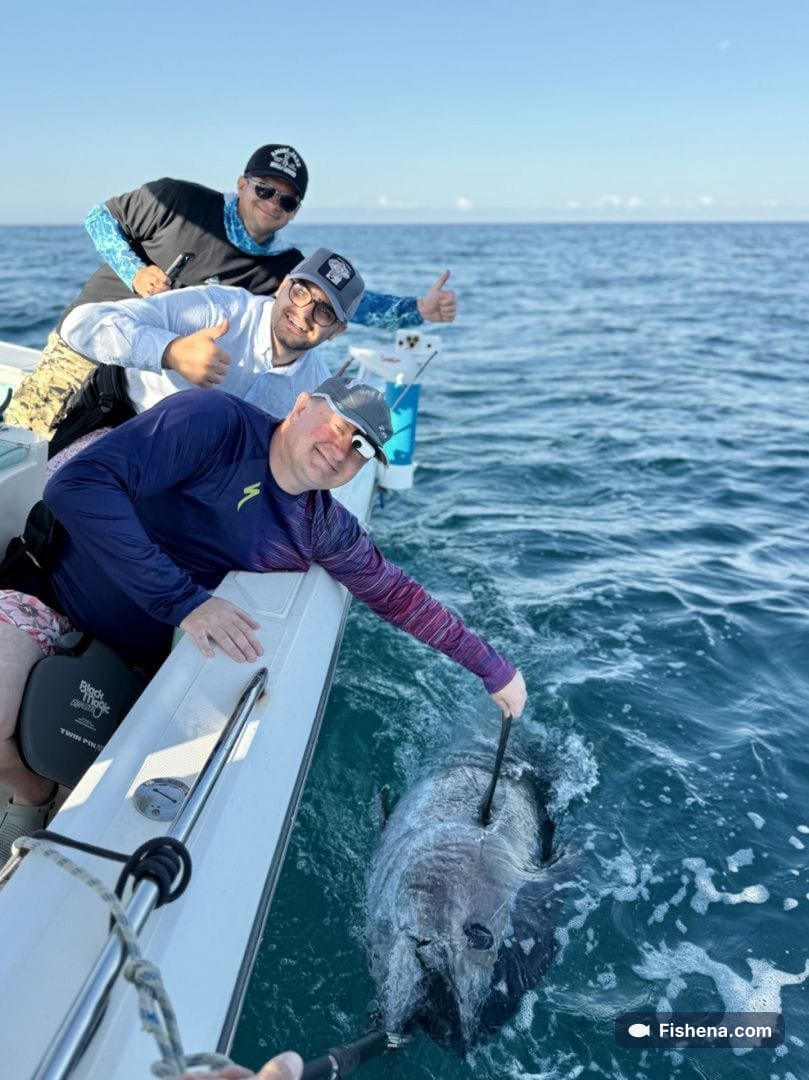
Istria has become one of the strongest bluefin tuna grounds in the Adriatic, and it's a relatively recent development — serious tuna fishing here only took off in the last two decades, compared to over 50 years of tradition further south. What sets the north apart is size: Istrian waters, especially around Pula, Rovinj, Poreč, and Medulin, tend to produce fewer but noticeably bigger fish, with 100kg-plus bluefin a realistic target and specimens over 200kg landed most seasons. Local captains often work at dawn alongside commercial sardine boats, since the bait fish they attract draw tuna in close. Beyond tuna, Istria holds mahi-mahi, dentex, John Dory, seabream, and blue shark, while the sheltered Lim Fjord near Rovinj offers a calmer alternative for families and light-tackle trips. Swordfish, by contrast, are rare this far north.
Kvarner — Krk, Cres, Lošinj, and Rijeka Bay
The Kvarner region is cooler and slightly wilder than Dalmatia further south, with strong currents that concentrate fish around the island channels of Krk, Cres, Rab, and Lošinj. Bluefin tuna are present from April through December, peaking in September and October, alongside dentex, mackerel, amberjack, thresher shark, and grouper. Cres and Lošinj are known for some of the country's best nearshore fishing, and the Lošinj channel is also home to a resident population of bottlenose dolphins.
Central Dalmatia — Split, Šibenik, Hvar, Brač, Vis, and the Kornati islands
This is the most complete fishing ground in the country, and Vis belongs here, not further south: its waters push into serious offshore depth toward the Jabuka Pit, a deep-water area that pulls in bluefin tuna, albacore, spearfish, and amberjack from May through October, making it the region's — and arguably the country's — most serious big-game destination. Around Split itself, tuna is one of the area's headline draws in its own right, with the season stretching into autumn and swordfish adding a second big-game target from October through December. Closer to shore, the Kornati archipelago — nearly 90 islands and islets — holds dentex, grouper, John Dory, and octopus in its sheltered channels, while Hvar, Brač, Ugljan, and Pašman round out the region with further shallow and deep-water variety.
Southern Dalmatia — Korčula, Mljet, Pelješac, and Dubrovnik
Here the water stays clean and deep close to shore, which favors trolling and reef fishing without a long run offshore. This is also where swordfish become a more frequent, realistic catch alongside tuna, and the south's tuna fishing tradition runs deeper — decades longer than the north's — even if the fish themselves tend to run smaller, more often in the 30–50kg range.
When to fish for what — the tuna calendar
Bluefin tuna are technically in Adriatic waters from April through December, but the season has real rhythm to it. April and May reward trolling and spinning for fish still migrating through. Then, from roughly late May to early July, most tuna push south into the wider Mediterranean to spawn, which is why the strongest, most consistent action — the true peak — runs from mid-July through mid-November, with September and October standing out as the prime window once the summer crowds thin out.
Squid, octopus, and the rest of the season
Dentex fishing is best avoided during the spawning closure (mid-April to mid-June), but excellent the rest of the year, especially in autumn and winter using vertical jigging over deep structure. Squid fishing has its own season entirely: they move closer to shore from around October through February, and evening jigging for them — using a weighted lure called a pescafondo, dropped to the bottom and worked back up in a fish-like motion — is a genuine Dalmatian tradition old enough to have been immortalized in 16th-century poetry by the Renaissance writer Petar Hektorović. Octopus, by contrast, are most accessible from May to November, typically taken with a baited line or an egi-style jig dragged slowly across rocky, weed-covered bottom.
Beyond the sea — Croatia's freshwater side
Fishena is built around Adriatic charters, but it's worth knowing Croatia has a genuinely world-class freshwater scene too. The Gacka River near Otočac is considered one of Europe's finest chalkstreams, with brown trout growing several times faster than in most other waters thanks to its clean, spring-fed flow — trophy fish over 4kg aren't unheard of. The Kupa and Slunjčica rivers add further fly-fishing terrain for grayling and trout, while the Drava and Danube hold catfish, pike, and carp on a different scale entirely.
What you'll be fishing for
Beyond bluefin tuna, the species that come up again and again on Croatian charters include dentex, amberjack, mahi-mahi, swordfish, European seabass, grouper, John Dory, mackerel, squid, cuttlefish, octopus, blue shark, and thresher shark. Bluefin is the Adriatic's signature tuna — albacore turns up offshore, but yellowfin and bigeye, familiar from canned tuna, aren't part of the picture here. Bluefin is the one prized for sushi-grade meat, and a fish that can live 40 years and grow past 250kg.
Techniques used on Croatian charters
Bottom fishing works year-round for reef species like dentex and grouper. Trolling and drift or anchored fishing with live or dead bait are the standard approach to bluefin tuna and other big pelagics offshore, often worked at dawn near bait-fish activity. Jigging — light or heavy depending on the target — suits a faster-paced fight, popping draws aggressive surface strikes from species like amberjack, and evening jigging with a pescafondo is the classic approach to squid.
Fishing licenses and rules
Anyone fishing recreationally in Croatian waters — from a boat or from shore, from age 14 — needs a valid permit. Charters typically arrange this for guests. For bluefin tuna specifically, there are two distinct paths: a sport fishing license, which requires catch-and-release with biodegradable hooks, and a separate recreational license with an annual catch quota, limited in number and allocated through a yearly bidding process. Big-game permits also cover swordfish and Mediterranean spearfish. Beyond that, recreational fishing carries a daily catch limit, and certain areas — harbours and public beaches in summer, river mouths, and the marine reserves of Kornati, Mljet, and Brijuni national parks — are closed to fishing or subject to extra rules.
Frequently asked questions
Do I need a license to fish in Croatia?
Yes. Anyone fishing recreationally in Croatian waters — from a boat or from shore, from age 14 — needs a valid permit. On a fishing charter, the captain typically arranges it for guests. Recreational fishing also carries a daily catch limit.
When is bluefin tuna season in Croatia?
Bluefin tuna are in the Adriatic from April through December. April and May suit trolling and spinning for fish still migrating through, and from roughly late May to early July most tuna head south to spawn. The strongest, most consistent action runs from mid-July through mid-November, with September and October the prime window.
What fish can you catch in the Adriatic Sea?
Bluefin tuna is the Adriatic's signature catch, alongside dentex, amberjack, mahi-mahi, swordfish, European seabass, grouper, John Dory, mackerel, squid, cuttlefish, octopus, blue shark, and thresher shark. Albacore turns up offshore, but yellowfin and bigeye tuna aren't part of the picture in Croatian waters.
Where is the best place to catch bluefin tuna in Croatia?
Two areas stand out. Vis, in Central Dalmatia, reaches serious offshore depth toward the Jabuka Pit and is arguably the country's most serious big-game destination, with bluefin from May through October. Istria — around Pula, Rovinj, Poreč, and Medulin — produces fewer but bigger fish, with 100kg-plus bluefin a realistic target and specimens over 200kg landed most seasons.
Do I need a special permit for bluefin tuna?
Yes. Bluefin tuna has two distinct paths in Croatia: a sport fishing license, which requires catch-and-release with biodegradable hooks, and a separate recreational license with an annual catch quota, limited in number and allocated through a yearly bidding process. Big-game permits also cover swordfish and Mediterranean spearfish.
When is squid season in Croatia?
Squid move closer to shore from around October through February. The classic method is evening jigging with a pescafondo — a weighted lure dropped to the bottom and worked back up in a fish-like motion — a Dalmatian tradition old enough to appear in 16th-century poetry by Petar Hektorović.
What techniques are used for fishing in Croatia?
Bottom fishing for reef species such as dentex and grouper works year-round. Bluefin tuna and other big pelagics are usually targeted by trolling, or by drift or anchored fishing with live or dead bait, often at dawn near bait-fish activity. Jigging, popping for surface strikes from species like amberjack, and evening squid jigging with a pescafondo round out the picture.
Can you fish in the Kornati islands?
The Kornati archipelago — nearly 90 islands and islets — holds dentex, grouper, John Dory, and octopus in its sheltered channels. But the marine reserve of Kornati National Park is closed to fishing or subject to extra rules, so where you can fish depends on the area. A local charter captain will know which waters are open.